
Our manufacturing processes
Our workshops extend over more than 3 500m²
Printing shop
Plate making/dye preparation:
- an area dedicated to colour research and definition by spectrometric analysis. Colours based on colour chart references (Pantone, RAL, NCS...) or a customer's sample;
- an area for producing screening frames with tensioning of the silks, direct coating or application on a capillary film, plotting, then screen reclamation after use. This gives us total control of the entire process.
Degreasing/varnishing (for metal supports only):
- 2 degreasing lines, one with a built-in brushing process for max. forms 700 mm wide (550 mm for brushing);
- 2 varnishing machines for applying coloured varnish or substrates for screening ink.
Silk-screen printing:
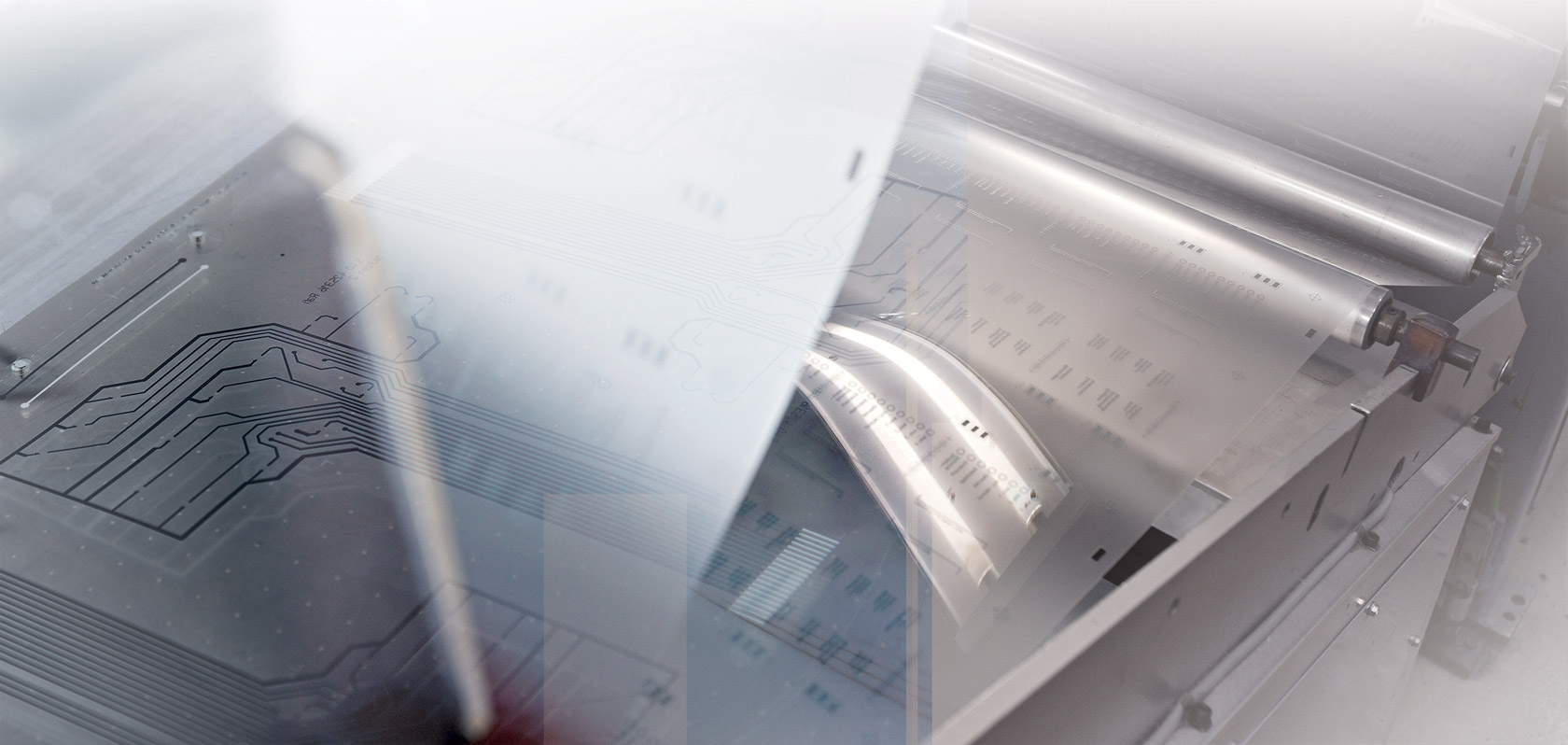
- 2 continuous printing machines (material on rollers), one for printing conductive inks, the other for production of decors. Drying in thermal ovens or UV is directly incorporated in each machine.
- 3 sheet silk-screen printing tables are used to work with metal and plastics before drying on-line or in ovens.
Cutting/deformation:
- a plastic cutting laser (type CO2) used for small production runs, large thicknesses or final cutting requiring dimensional tolerances of less than +/- 0.3 mm,
- 4 die-cutting machines equipped with bladed tools for cutting plastics (adhesives, polyester, polycarbonate) into thicknesses of less than 1 mm;
- various step by step and/or band feed mechanical presses equipped with matrix-punch tools used to cut metal sheets or strips;
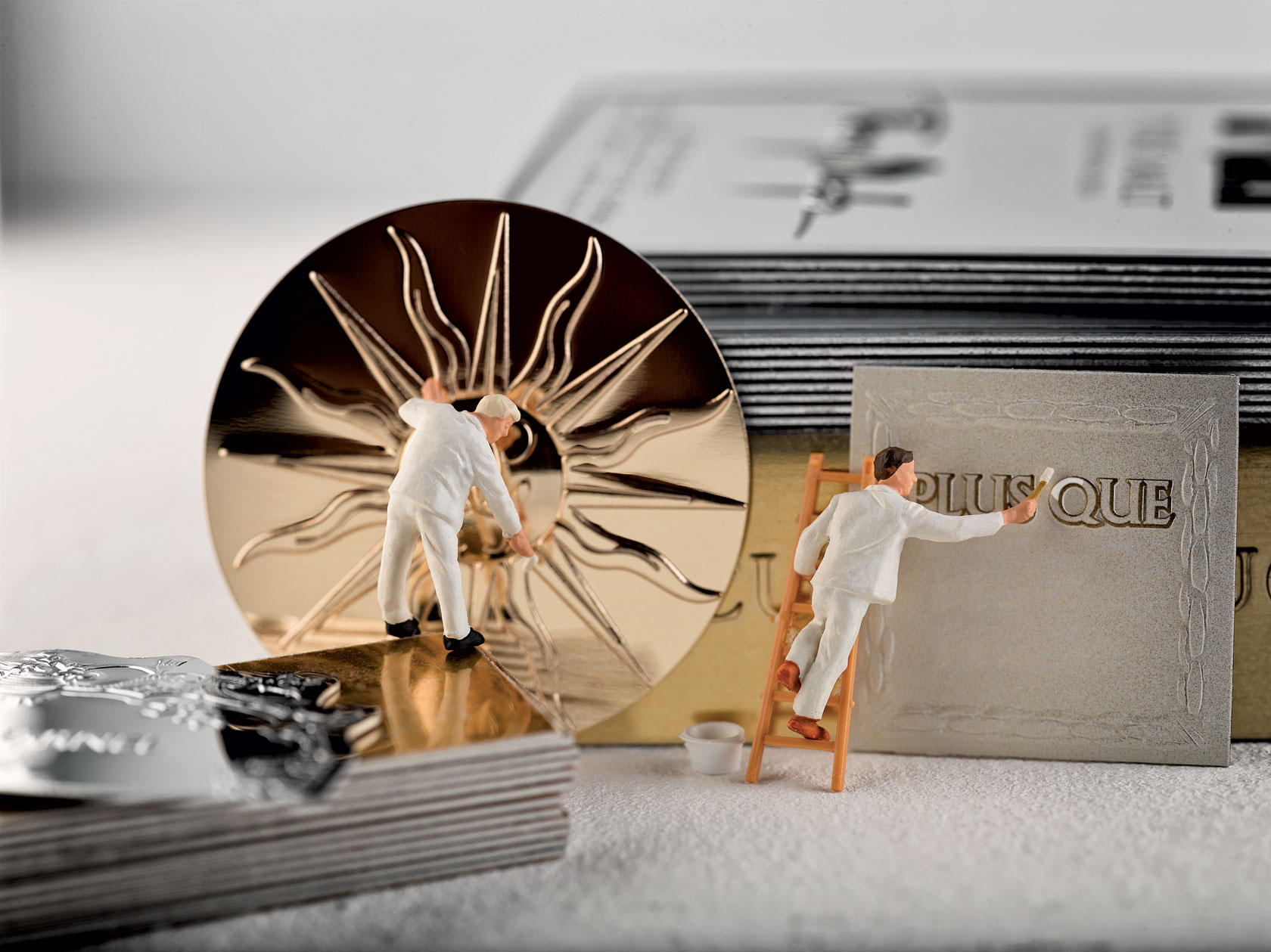
- 2 embossing machines and a thermoforming press to provide attractive relief, 3D form or tactile sensation on a polyester and polycarbonate base;
- a hydraulic stamping press;
Lamination/assembly:
- a material laminating and cutting machining used to complex up to 3 different materials simultaneously and output the end result in the desired format.
- semi-automatic laminating tables developed exclusively for PIM Industries. Guaranteed repeatability and faultless binding quality between the different layers making up our keyboards;
- highly dextrous operators for all manual offset operations (sheet stop, sheet reinforcement...) or assembly of very small parts.
Component transfer:
- fully automatic operation;
- machine stock allowing great flexibility in production organization;
- 1 SMD component transfer robot;
- 1 dome switch transfer robot;
- 1 mixed robot (dome switch and SMD components);
- more than 4 million dome switches and 2 million LEDS removed per year.
Electrical test and final inspection:
- final inspections of all parts despatched (functional testing of buttons and LEDS, loop resistance, short-circuit...),
- manual or automatic tester.
- production of particular test template and cable according to part specifics;
- visual inspection of 100% of parts before shipment.
© PIM Industries - Kerdaïno Group | Terms of use | Sitemap | Conception 2exVia avec MasterEdit©